
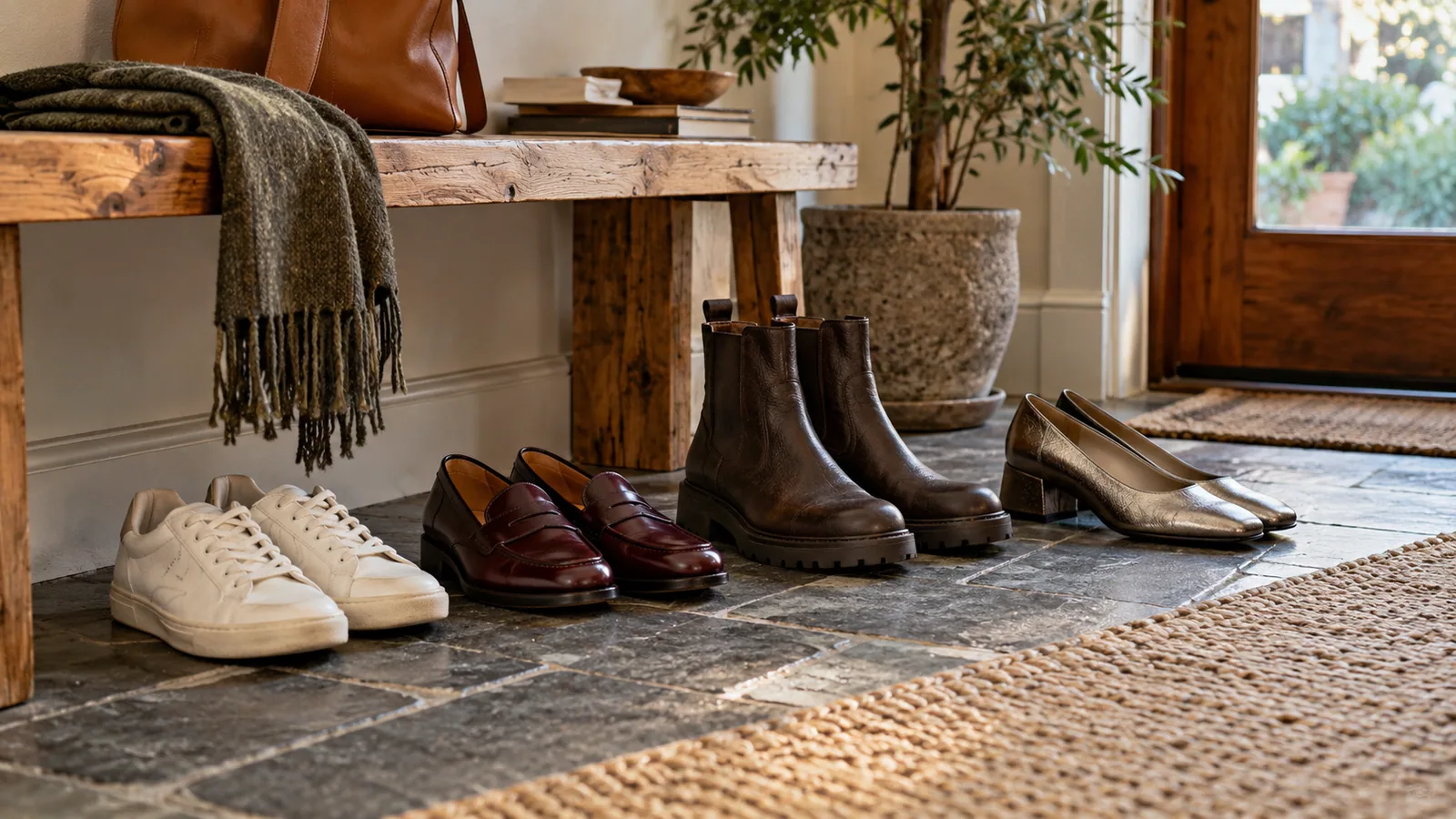
A useful shoe wardrobe is about roles, not categories. The names may change by climate and dress code, but most weeks need a walking pair, a polished flat, a weather-capable option, and one shoe that shifts the mood.
Choose each pair only after considering the hems you wear most. Shoes do not live alone; their volume, color, and height need to cooperate with your trousers, skirts, and dresses.
The real-life scene
In one week, a supportive sneaker handles the commute, a burgundy loafer sharpens a client lunch, a treaded ankle boot covers rain, and a metallic low heel changes a simple black dress for dinner. Each pair has a clear role and at least three outfits waiting.
Why the outfit works
The rotation works because the shoes vary in function while sharing a compatible color story. None is so specific that it serves a single outfit, and each has enough visual character to finish a simple base.
What to check before buying
Map the gaps
Track what you wear for two weeks. Buy for the repeated situation that causes friction, not for an imagined event.
Rotate recovery time
Alternating pairs allows interiors to dry and materials to rest, which can improve comfort and longevity.
Keep one expressive option
A red flat, metallic sandal, or patterned boot prevents a practical rotation from becoming purely functional.
The Dreszine formula
- Supportive sneaker
- Polished loafer or flat
- Weather-ready boot or sandal
- Expressive event shoe
One thing to skip
Avoid filling the same role repeatedly. Three similar black ankle boots create fewer useful choices than one excellent pair and a complementary loafer.
Continue the edit
Browse with the checklist in mind
Use the fit and function notes above while comparing current options. Availability and pricing can change.
Explore at Zappos ↗The lasting idea
When each pair answers a real need, a small shoe wardrobe feels abundant. Let the roles guide the edit and the personality guide the final choice.