
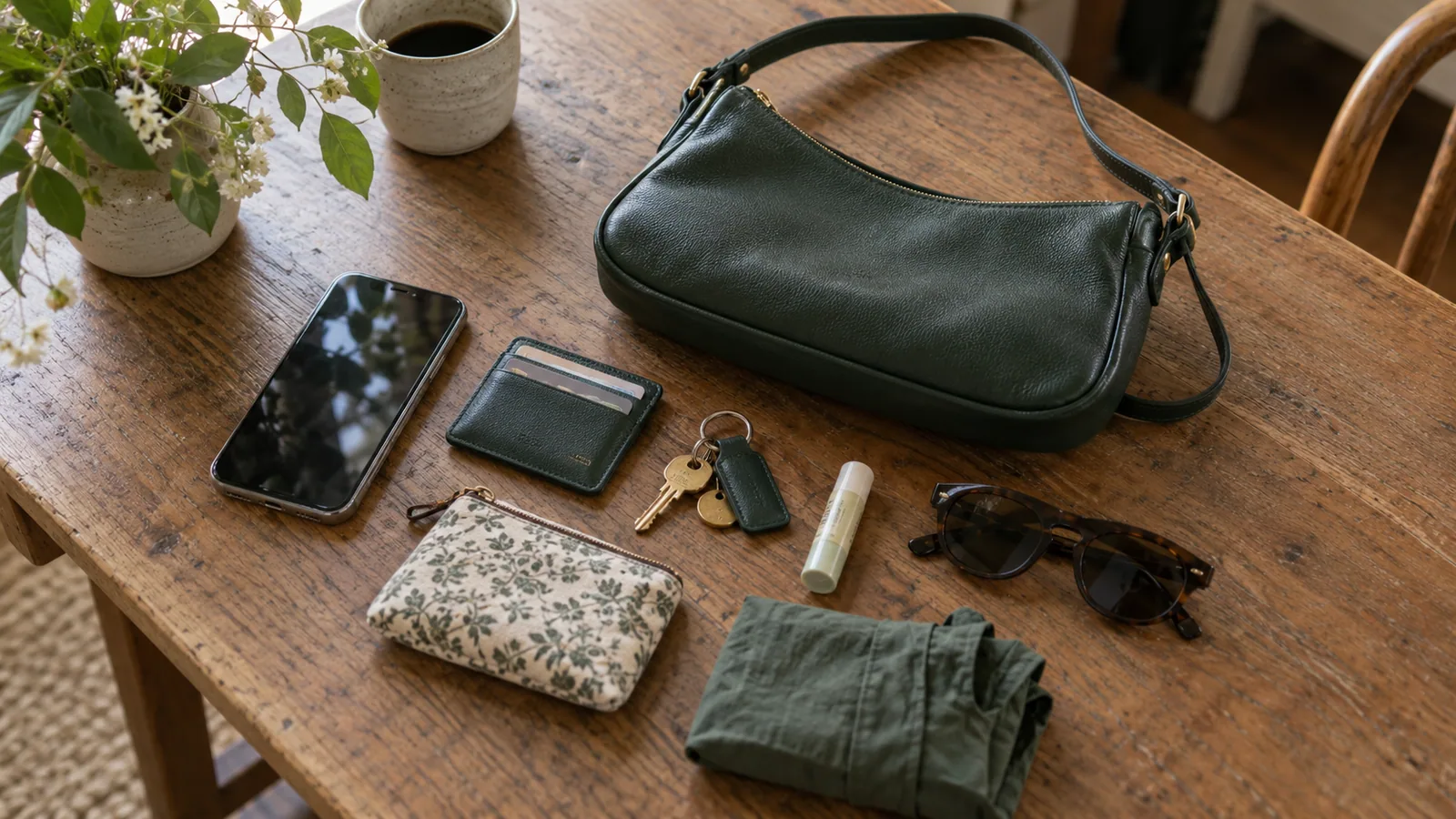
Carrying a small bag is easier when essentials are reduced by function rather than randomly left behind. Payment, access, communication, comfort, and one contingency are the categories that matter. Most duplicates do not.
Use slim versions of daily items and group loose objects in one soft pouch. The goal is to find everything by touch, not to build a miniature emergency cabinet.
The real-life scene
For a day that moves from errands to dinner, a small shoulder bag holds a phone, card case, keys, lip balm, folding sunglasses, and a tiny pouch with medication. A reusable tote folds flat for any purchase and returns to the bag afterward.
Why the outfit works
A lighter bag sits better on the body and allows a smaller silhouette to keep its intended shape. Fewer objects also reduce the time spent searching in public spaces.
What to check before buying
Start with the opening
A small bag with a generous zipper or magnetic flap may be more useful than a larger bag with a narrow frame.
Choose flexible organizers
Soft pouches conform to the interior and can move between bags. Rigid cases waste odd-shaped space.
Use one backup
Carry one contingency item specific to your day, such as a battery or compact umbrella, rather than every possible solution.
The Dreszine formula
- Phone
- Slim cards and keys
- One comfort item
- One day-specific backup
- Foldable tote
One thing to skip
Avoid overstuffing until the closure distorts. A bag that cannot close securely is no longer doing its basic job.
Continue the edit
Browse with the checklist in mind
Use the fit and function notes above while comparing current options. Availability and pricing can change.
Explore at ASOS ↗The lasting idea
A small bag is an editing exercise. Keep what solves a real problem, give every item a place, and let the lighter carry change how you move.