
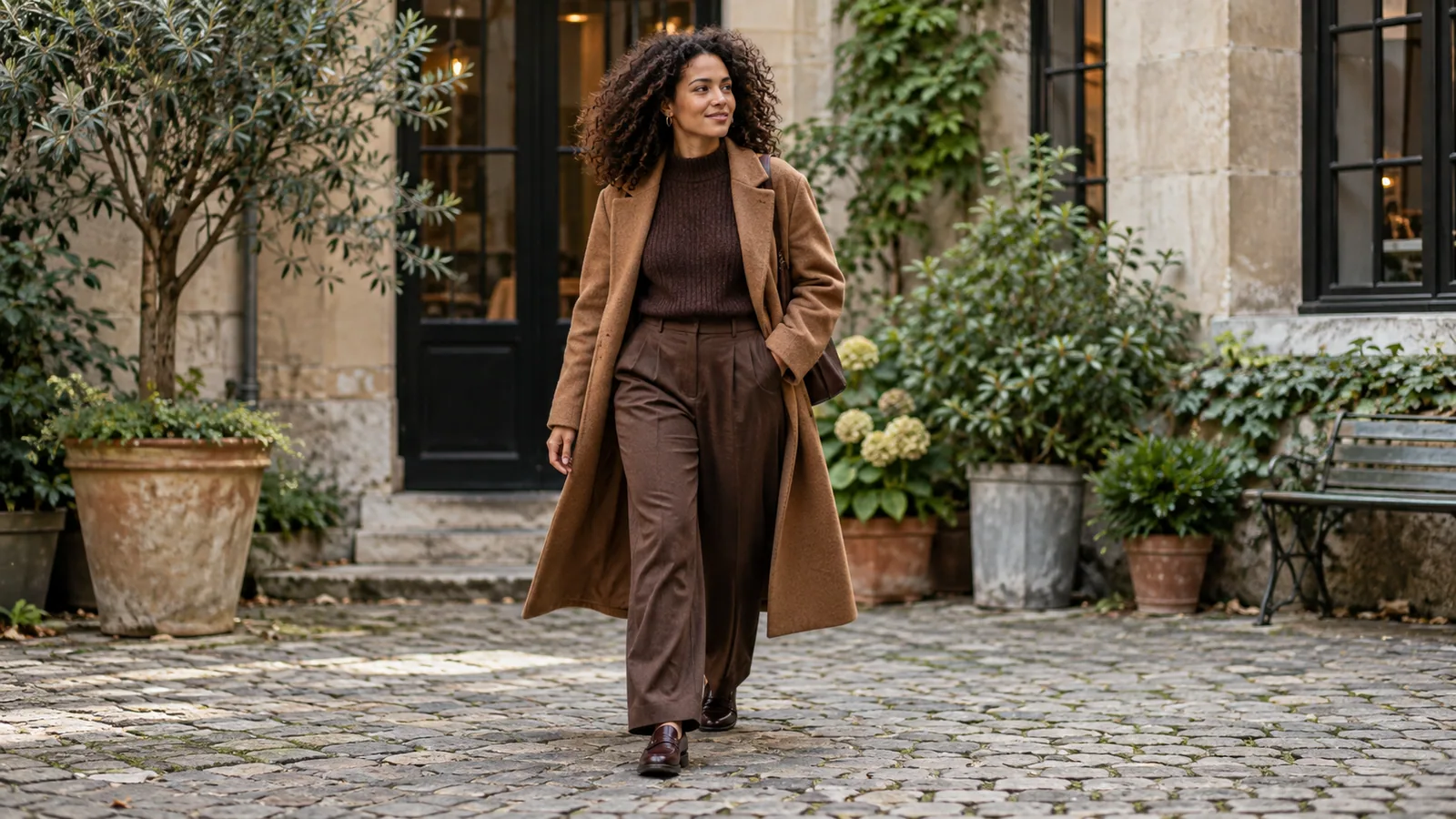
Dressing in one color family is an efficient way to create a long visual line, but exact color matching can look stiff. The most interesting monochrome outfits move through nearby shades and let different materials reflect light in different ways.
Choose a dark anchor, a mid-tone main piece, and a lighter or brighter point near the face. The colors do not need to match. They need to look related under the same light.
The real-life scene
For a relaxed dinner, chocolate trousers meet a tobacco knit and camel coat. A deep brown bag and oxblood shoe bring the palette down again, while a small gold earring adds warmth near the face.
Why the outfit works
Value contrast gives the eye somewhere to travel. The matte trouser, ribbed knit, smooth leather, and brushed coat each respond differently, so the outfit feels layered even though the hue barely changes.
What to check before buying
Compare in daylight
Store lighting can turn undertones. Step near a window and check whether the shades feel intentional together.
Mix surfaces
Pair soft with smooth, woven with polished, or matte with a slight sheen. Texture prevents one-color dressing from reading as a uniform.
Keep the silhouette legible
If every piece is oversized, the color story cannot create enough structure. Define one shoulder, waist, wrist, or ankle.
The Dreszine formula
- Dark anchor bottom
- Mid-tone knit or shirt
- Lighter outer layer
- Deeper bag or shoe
- Warm metal detail
One thing to skip
Avoid forcing two almost-matching blacks or navies when their undertones clearly fight. Add a third shade or texture so the variation reads as deliberate.
Continue the edit
Browse with the checklist in mind
Use the fit and function notes above while comparing current options. Availability and pricing can change.
Explore at NET-A-PORTER ↗The lasting idea
Monochrome dressing works when the color is the background and the materials tell the story. Let the shades breathe instead of chasing a perfect match.